The TL;DR version
- Night guards protect your teeth, but research hasn’t found that they reliably reduce grinding.
- Biofeedback is a proven way to retrain body habits, and studies show it reduces grinding while you sleep.
- Zerene combines both: protection plus retraining, backed by a 100% money-back guarantee.
You wake up with a sore jaw. Some mornings there’s a headache waiting for you before your feet hit the floor. Maybe your partner has heard the grinding. Maybe your dentist pointed out the wear on your teeth and handed you a night guard.
So you wear it. Every night. And the grinding is still there.
If that sounds familiar, you’re not failing treatment. Treatment has been failing you.
The good news: researchers have spent more than two decades studying what actually changes the grinding habit, and one approach keeps showing results. This guide walks through what the research says about night guards, why biofeedback is different, and how to tell if it’s a fit for you, so you can stop putting a bandaid on your grinding and finally get some relief.
Why you grind at night
Nighttime grinding and clenching has a clinical name: sleep bruxism. An international group of bruxism experts defines it as jaw-muscle activity during sleep, and in otherwise healthy people, they describe it as a behaviour rather than a disorder.
That distinction matters, because behaviours can be retrained.
Your jaw muscles are firing on their own while you sleep. You can’t decide to stop, because you’re not awake to make that decision. A few things tend to make it worse:
- Stress and anxiety
- Caffeine, alcohol, and smoking, especially later in the day
- Some medications, including certain antidepressants
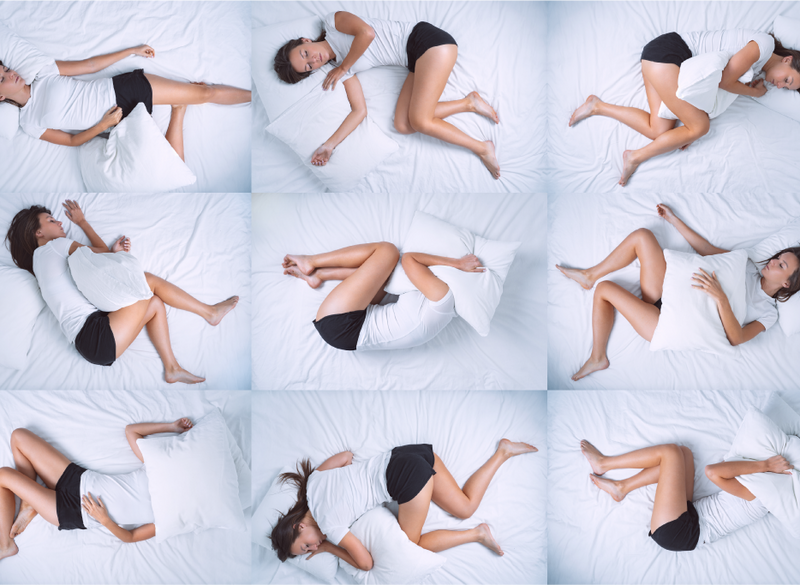
- Sleep position (here’s what yours may reveal)
One note: if you also snore loudly or wake up gasping, mention it to your doctor. Grinding sometimes shows up alongside sleep apnea, and that’s worth checking.
And a common myth: straightening your teeth with braces or aligners like Invisalign doesn’t stop grinding. Many people finish orthodontic treatment believing the problem is solved, only to find the habit is still there.
The usual advice, and what each one actually does
Search “how to stop grinding teeth at night” and you’ll find the same list everywhere. Most of these are worth doing. The catch is that most of them manage the symptoms or the damage while the habit itself carries on.
Manage vs. retrain
| Option | What it helps | What it doesn’t do | Retrains the habit |
|---|---|---|---|
| Stress relief and better sleep habits | Can lower how often you grind on tough nights | Doesn’t reach the habit while you’re asleep | – |
| Cutting caffeine and alcohol | Removes common triggers | Doesn’t stop grinding on its own | – |
| Jaw exercises and physical therapy | Eases muscle tension and pain | Doesn’t stop the nighttime grinding itself | – |
| Medications | May reduce grinding short-term | Usually only recommended briefly, due to side effects | – |
| Botox | Weakens the jaw muscles and can ease pain | Wears off in 3 to 6 months; the grinding usually returns | – |
| Night guards | Protects your teeth from wear | Doesn’t change what your jaw does | – |
| Biofeedback | Retrains the habit while you sleep | Works best with consistent use | ✓ |
On a phone? Swipe the table sideways.
Notice the pattern. Almost every option either shields you from the damage or quiets the muscles for a while. Very few try to change the behavior itself.
Night guards protect your teeth. The grinding keeps going.
A night guard is the most common thing dentists recommend, and for good reason: it puts a barrier between your teeth so your enamel takes less of the force. That protection matters.
But a guard is a shield. It sits there and absorbs the grinding, night after night. It was never built to change what your jaw is doing.
Shield vs. coach
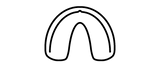
A night guard
The shield
Takes the force night after night. The grinding underneath stays the same.
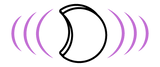
Zerene
The shield plus a coach
Protects your teeth and cues your jaw to let go, so the grinding drops over time.
Illustration of the concept. Individual results vary.
The research backs this up:
- A Cochrane review, one of the most rigorous types of medical evidence review, found there wasn’t enough evidence that night guards are effective for sleep bruxism, though they may help with tooth wear.
- A 2018 review of 16 studies found some short-term reductions in grinding, but not enough evidence that guards reduce it over the long term.
- A 2024 meta-analysis found that hard and soft night guards did not change jaw-muscle activity or bite force in people who grind.
In other words, if you’ve worn a guard for years and the grinding never stopped, nothing went wrong. The guard did its job. It just can’t do the other one.
That’s why Zerene keeps the protection and adds the part that’s been missing: retraining.
Biofeedback: a proven way to retrain body habits
Biofeedback sounds technical, but the idea is simple. A sensor notices what your body is doing, gives you a signal in the moment, and over time your body learns to respond on its own.
The biofeedback loop
1
Sense
The sensor detects a clench
2
Cue
A gentle vibration
3
Release
Your jaw lets go
4
Learn
With repetition, your jaw relaxes on its own
↻ Repeat night after night until your jaw learns the new habit
This isn’t a new or fringe idea. Clinicians have used biofeedback for decades to help people change habits their bodies run on autopilot.
- A meta-analysis of 53 studies found biofeedback reduced tension-type headaches with a medium-to-large effect that held for an average of 15 months. It outperformed placebo and relaxation training.
- A 2019 evidence map in the Journal of General Internal Medicine found clear, consistent evidence that biofeedback helps with headaches and with some forms of incontinence after surgery.
The principle is the same for grinding. The difference is that it has to work while you’re asleep, which is exactly what researchers set out to test.
The evidence for biofeedback and teeth grinding
Researchers have been testing biofeedback for sleep bruxism since at least 2001. The approach is always the same: detect the clench, send a gentle cue, and measure whether the grinding goes down. Here’s what they found.
25 years of research
Vibration studies (how Zerene works) Electrical-cue studies
2001 · Vibration
First vibrating night guard
Grinding held back without substantial sleep disruption Source
2015 · Vibration
Beat a regular guard
Vibration biofeedback cut grinding at 6 and 12 weeks; the guard group saw no significant change Source
2020 · Vibration
Randomized trial, 41 patients
Less grinding and better jaw pain than a standard splint, without waking patients Source
2024 · Vibration
9 weeks of lower grinding
Grinding stayed lower while the vibration cues were on Source
2026 · Zerene
Zerene: more than 95% less grinding
Published case report, one user over 10 weeks Source
A cue can work while you sleep. The first case report of a vibrating night guard, published in 2001, found that a vibration triggered by grinding held the habit back without substantially disturbing sleep.
Grinding goes down. In a randomized controlled trial, people using biofeedback had 52% fewer jaw-muscle episodes per hour of sleep. A second study found about 35% fewer episodes during biofeedback and 38% fewer afterward. A 2018 meta-analysis pooling these trials concluded that biofeedback reduces grinding after a short period of use.
Your sleep stays intact. A sleep-lab study found biofeedback cues didn’t change total sleep time, deep sleep, REM sleep, or how often people briefly woke.
Vibrating guards, the approach Zerene uses, show the same pattern:
- In a pilot study comparing vibration biofeedback with a regular guard, grinding episodes dropped significantly at 6 and 12 weeks with biofeedback. The regular guard group saw no significant change.
- In a randomized controlled trial of 41 patients, a biofeedback splint reduced how often and how long people ground, and improved facial pain and overall well-being, compared with a standard splint. The researchers noted it worked at the subconscious level, without waking patients.
- In a 14-week trial, grinding stayed lower through 9 weeks of vibration cues, then crept back up when the cues stopped.
In a randomized trial, a biofeedback splint reduced grinding without waking patients, and improved jaw pain more than a standard splint.
What it all adds up to. Biofeedback is a proven approach to reducing grinding while you sleep. Like any approach, it doesn’t work the same for everyone, and it works best with consistent use. That’s why the details matter: how the device senses, how the cue is tuned, and whether someone helps you stick with it.
5 quick questions · Backed by a 100% money-back guarantee
Where Zerene fits: proven relief and active protection
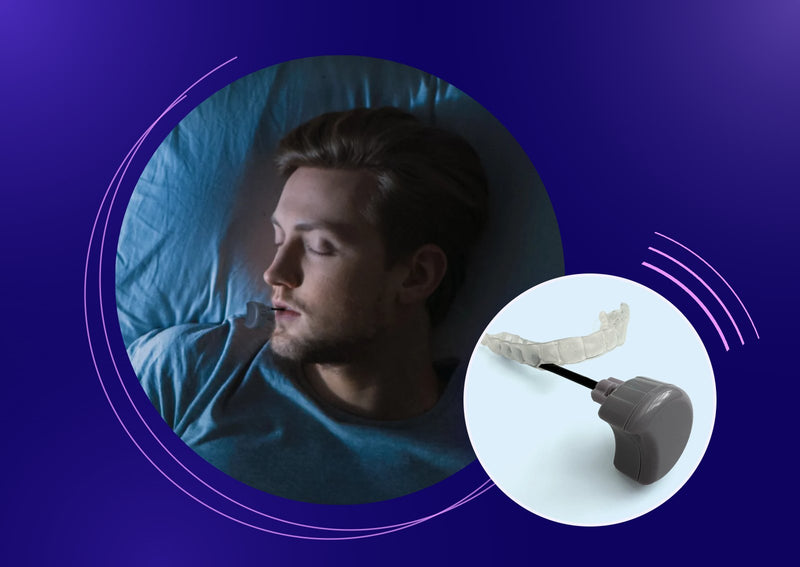
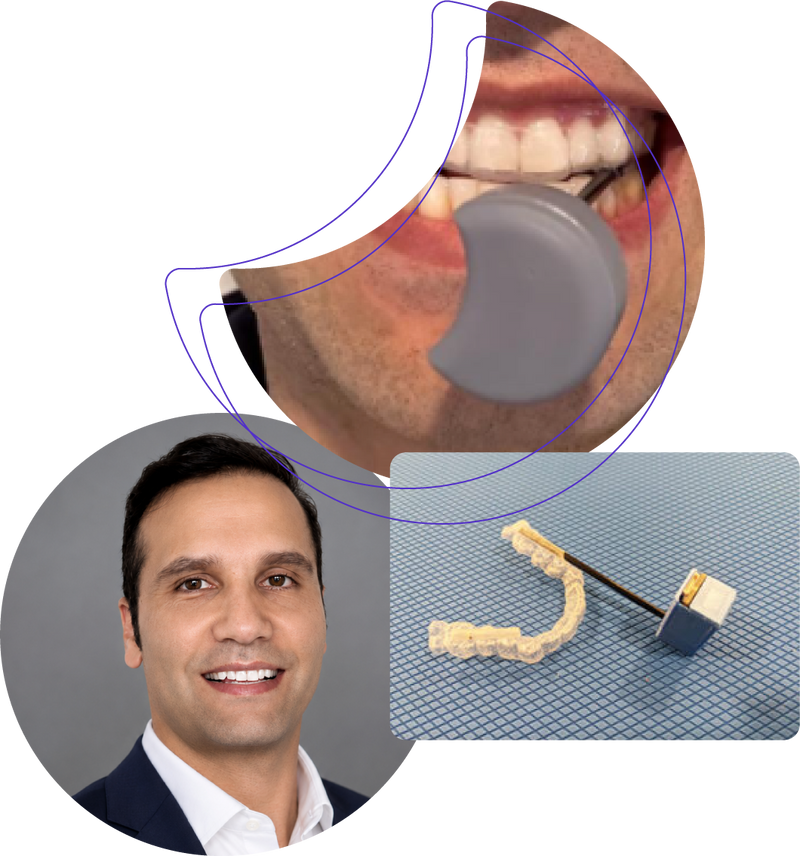
Zerene was built around what the research shows works. It combines the two things you need: a custom night guard that protects your teeth from the first night, and gentle vibration biofeedback that retrains the habit.
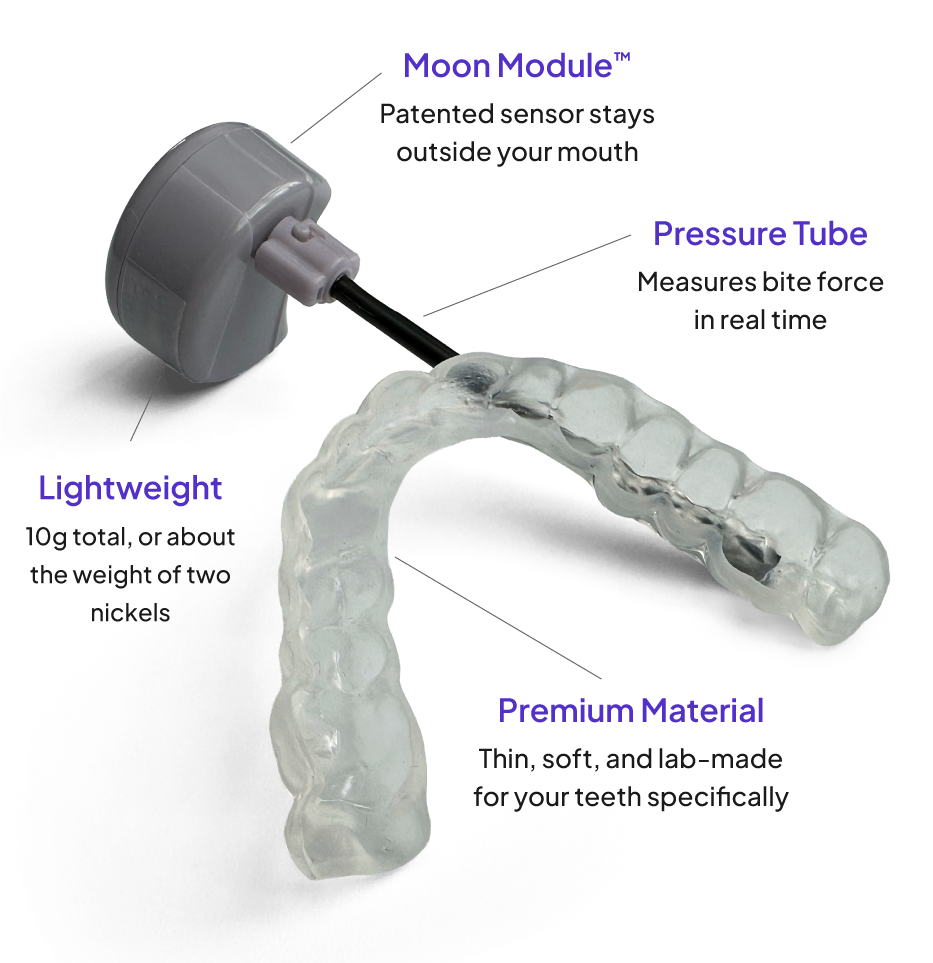
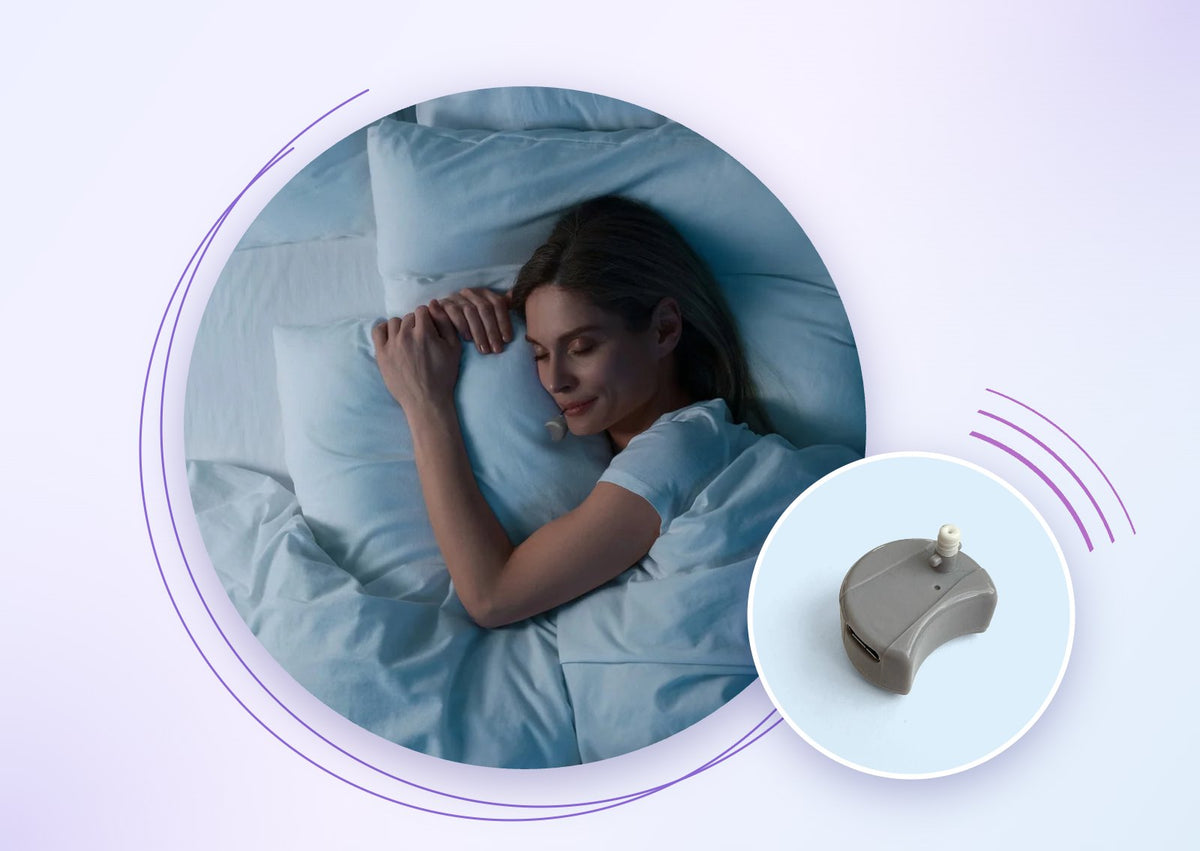
It senses at the source. The Moon Module measures bite force right at your teeth and grades every clench as weak, medium, or hard. When you clench, it sends a gentle vibration through the guard. Your jaw lets go, and you stay asleep.
It follows the same structure as the research. Expert guidelines for biofeedback recommend starting with a baseline period before the cues turn on. Zerene works the same way:
1. First 3 to 5 nights
Study Mode
Feedback off, so you and your coach can see your baseline.
2. Night 6 on
Training Mode
The gentle cue turns on, and the retraining begins.
3. As needed
Maintenance Mode
Once your jaw has learned to rest, you wear Zerene only when you need a tune-up.
Zerene Coach helps get the best results. Research shows the strength of the cue matters. Your Zerene coach is a real person who reviews your data and adjusts your settings as you improve.
The results so far. In Zerene’s published case report, one user saw more than a 95% reduction in grinding activity over 10 weeks. Zerene users can see up to a 90% reduction, tracked every morning with their Z-Score.
Worth a shot, risk-free
Biofeedback doesn’t work the same for everyone, so Zerene is backed by a 100% money-back guarantee. Follow the program, and if your grinding doesn’t go down, you get your money back. Your own data is the judge.
Already a biofeedback believer? Read our guide to choosing the right biofeedback device.
Is Zerene right for you?
Zerene could be a good next step if:
- You still grind or clench, even with a night guard
- You wake up with jaw soreness, tension, or headaches
- You’re ready for something that works on the habit itself
To use Zerene, you’ll need to meet a few basics. You should be able to wear a mouthguard comfortably and make a dental impression at home. If you have cracked or loose teeth that haven’t been looked at, or tooth pain from cavities or dental work, see your dentist first.
Quick fit check
See if Zerene is a fit for you
Answer 5 quick questions about the basics (it takes under a minute) and find out if you’re ready to start.
100% money-back guarantee if your grinding doesn’t improve
Frequently asked questions
Does a night guard stop teeth grinding?
A night guard protects your teeth from the force of grinding, but research hasn’t found that it reliably reduces grinding over time. A 2024 meta-analysis found guards didn’t change jaw-muscle activity or bite force.
Can you stop grinding your teeth for good?
Because sleep bruxism is a behaviour, it can be retrained. Biofeedback studies show grinding goes down with consistent use, and some people reach the point where they only need occasional check-ins. Results vary from person to person.
Does Invisalign or orthodontic treatment stop grinding?
No. Straightening your teeth changes how they line up, but the jaw-muscle habit behind grinding usually continues.
Will biofeedback wake me up?
It shouldn’t. A sleep-lab study found biofeedback cues didn’t disrupt sleep, and Zerene’s cue is a gentle vibration you feel in the guard. Most people barely notice it after the first few nights.
What’s the best sleep position for teeth grinding?
Sleep position can affect how much you clench. Read more about what your sleep position reveals about bruxism. Zerene works for side and back sleepers.
What if biofeedback doesn’t work for me?
Zerene is backed by a 100% money-back guarantee. Follow the program, and if your grinding doesn’t go down, you get your money back. See the full terms.
You deserve something that finally works
You’ve protected your teeth. Now it’s time to work on the habit. Biofeedback is a proven approach backed by more than two decades of research, and Zerene pairs it with the protection of a custom guard and a real coach in your corner.
See if Zerene is a fit for you100% money-back guarantee · HSA/FSA reimbursement eligible · No prescription or appointment
Sources
- Lobbezoo F, et al. International consensus on the assessment of bruxism: Report of a work in progress. J Oral Rehabil. 2018.
- Macedo CR, et al. Occlusal splints for treating sleep bruxism (tooth grinding). Cochrane Database Syst Rev. 2007.
- Jokubauskas L, et al. Oral appliances for managing sleep bruxism in adults: a systematic review from 2007 to 2017. J Oral Rehabil. 2018.
- Ferreira GF, et al. Influence of occlusal appliances on the masticatory muscle function in individuals with sleep bruxism. Eur J Oral Sci. 2024.
- Nestoriuc Y, Rief W. Meta-analysis of biofeedback for tension-type headache. J Consult Clin Psychol. 2008.
- Kondo K, et al. Efficacy of biofeedback for medical conditions: an evidence map. J Gen Intern Med. 2019.
- Watanabe T, et al. A vibratory stimulation-based inhibition system for nocturnal bruxism. J Prosthet Dent. 2001.
- Jadidi F, et al. Assessment of sleep parameters during contingent electrical stimulation. Eur J Oral Sci. 2011.
- Jadidi F, et al. Effect of contingent electrical stimulation on jaw muscle activity during sleep. Acta Odontol Scand. 2013.
- Conti PC, et al. Contingent electrical stimulation inhibits jaw muscle activity during sleep. Oral Surg Oral Med Oral Pathol Oral Radiol. 2014.
- Gu W, et al. Efficacy of biofeedback therapy via a mini wireless device on sleep bruxism contrasted with occlusal splint. J Biomed Res. 2015.
- Jokubauskas L, et al. Efficacy of biofeedback therapy on sleep bruxism: a systematic review and meta-analysis. J Oral Rehabil. 2018.
- Lobbezoo F, et al. Consensus-based clinical guidelines for ambulatory electromyography and contingent electrical stimulation in sleep bruxism. J Oral Rehabil. 2020.
- Bergmann A, et al. Effect of treatment with a full-occlusion biofeedback splint on sleep bruxism and TMD pain. Clin Oral Investig. 2020.
- Maejima K, et al. Effects of vibratory feedback stimuli through an oral appliance on sleep bruxism. J Dent Sci. 2024.
- Kawahara S, et al. Reduction of sleep bruxism events according to contingent electrical stimulus intensity. J Oral Rehabil. 2024.
- Parker S, Sabet A, Sulack S. Efficacy of the Zerene biofeedback device in the management of sleep bruxism and associated comorbidities. Sleep & Wellness Magazine. Q1 2026.