The lights go up. The group chat starts planning. Somewhere between the first holiday playlist and the third gift you still haven’t bought, your jaw starts to feel it.
If you wake up this time of year with a tight, tired jaw or a dull headache, you’re not imagining it. Stress is linked to teeth grinding and clenching, and the holidays pack a lot of stress into a few short weeks. The good news: looking after your jaw doesn’t have to be one more thing on your list.
Holiday stress is real, and it’s growing
You can love this season and still feel stretched thin. Most people do.
In the American Psychiatric Association’s holiday poll last year, 41% of U.S. adults said they expected the holidays to be more stressful than the year before, up from 28% the year before that. For adults 18 to 34, it was nearly half. The worries behind it are familiar:
The holiday stress stack
What people worry about most this season
48%
Missing someone
46%
Affording or finding gifts
32%
Family dynamics
31%
Loneliness
Source: American Psychiatric Association Healthy Minds Poll, November 2025.
Add travel, hosting, end-of-year deadlines and later nights, and it’s a lot for one body to carry. For many of us, the jaw is where it lands.
Where that stress goes at night
Researchers have studied the link between stress and bruxism (the clinical name for grinding and clenching) for years. A 2020 review that pooled the research found a significant association between the two, while noting the evidence still needs stronger studies.
Here’s the simple version. Stress keeps your body a little on alert, even after you fall asleep. For a lot of people, the jaw muscles are where that tension shows up. You clench during a tense email in the afternoon, and your jaw keeps working the night shift after you’ve gone to bed.
The holidays add a few extras on top: later nights, a glass of wine (or three) at the party, extra coffee to get through the morning after, travel and unfamiliar beds. Each one can make for a rougher night.
Signs your jaw is carrying the season
Most people who grind at night don’t know it until something else tips them off. See if any of these sound familiar:
Sound familiar?
Signs your jaw is carrying the season
A sore, tight or tired jaw when you wake up
Headaches around your temples, especially in the morning
Teeth that feel sensitive, or look chipped or worn
Your dentist or hygienist has pointed out tooth wear, flattened edges or little “potholes” in your teeth from grinding
A partner who hears grinding at night
Clenching during the day when you’re busy or tense
If you checked a few, your jaw may be doing more work than you think.
Small ways to give your jaw a break
Nobody needs a 12-step holiday wellness plan. A few small habits can help:
Lighten the load
Small ways to give your jaw a break
Notice daytime clenching
Lips together, teeth apart, tongue resting gently on the roof of your mouth. A sticky note on your laptop helps.
Take two minutes to wind down
Put the phone down, take a few slow breaths and let your shoulders and jaw drop.
Go easy on late caffeine and alcohol
You don’t have to skip the eggnog. Just give your body a little time before sleep.
Protect your sleep where you can
Even one or two nights of decent rest a week makes the season easier.
Or let your sleep do the work
Zerene adds nothing to your to-do list. Put it in and go to sleep.
These help. They also ask you to remember one more thing during the busiest weeks of the year. That’s where Zerene comes in.
The easiest one: let your sleep do the work
Most advice for a stressed-out jaw asks you to do more. Zerene asks you to put it in and go to sleep.
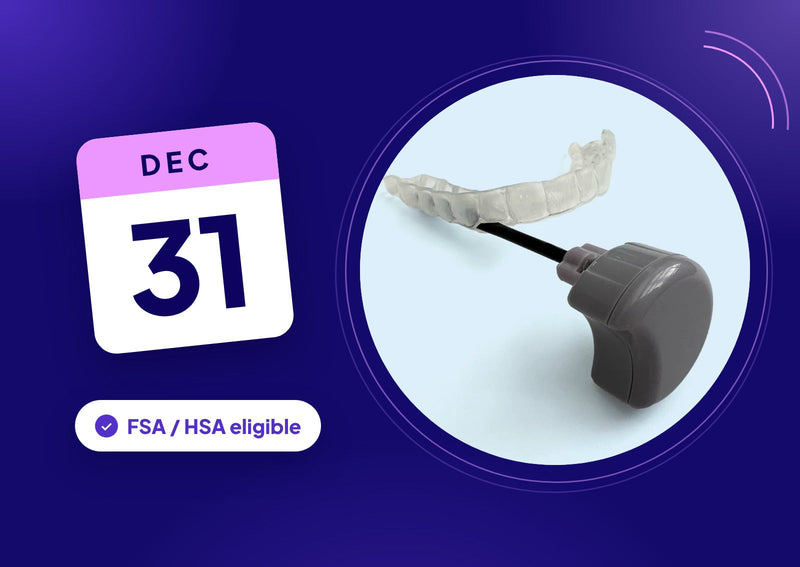
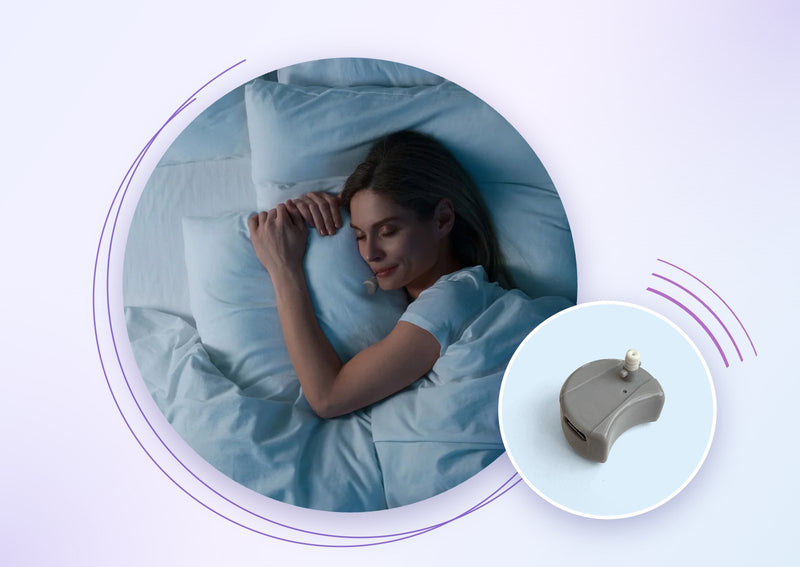
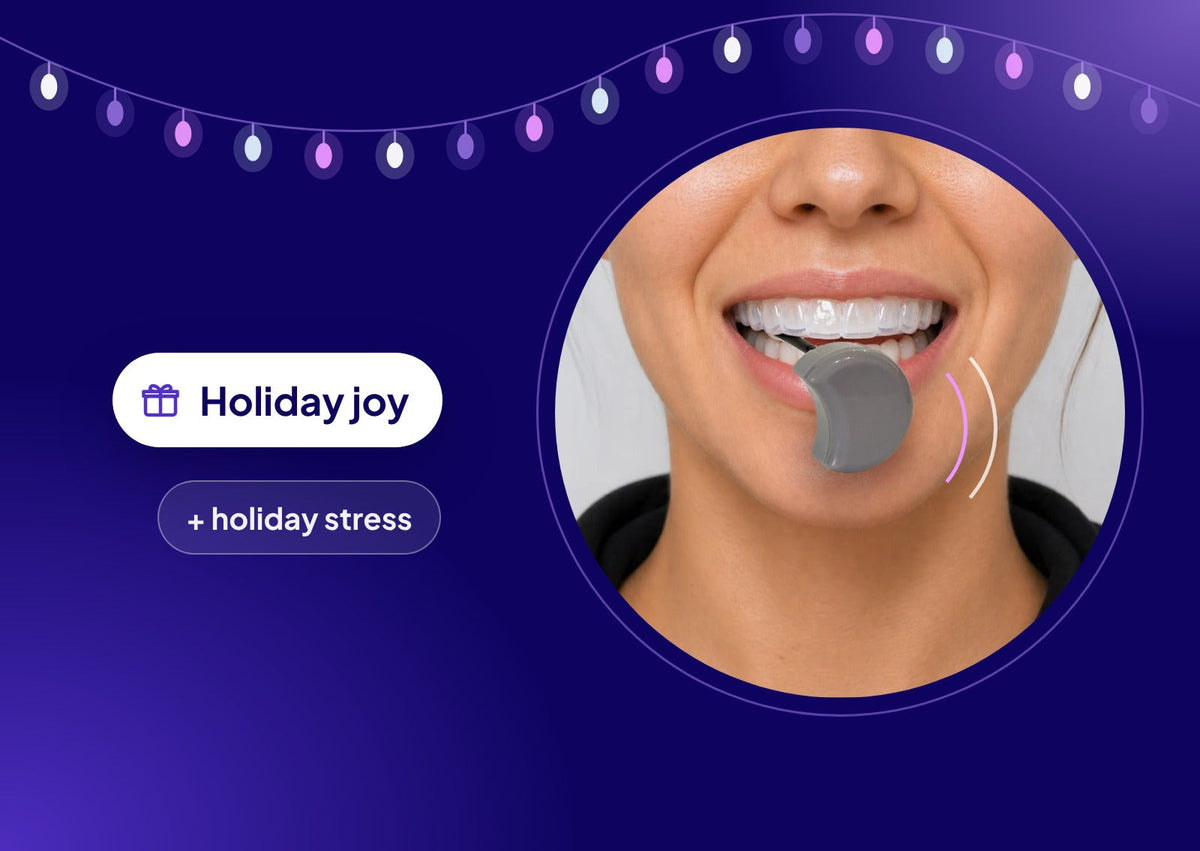
Zerene is a custom-fit smart mouthguard. It protects your teeth like a regular night guard, and it does something a regular guard can’t: a small sensor notices when you start to clench and sends a gentle vibration. Your jaw relaxes, often without you waking up. Night after night, your jaw learns to let go on its own. Training takes about 2 to 3 weeks, and users have seen up to 90% less grinding.
How Zerene works
Night after night, your jaw learns to let go
01
Notice
A small sensor notices when you start to clench.
02
Gentle cue
It sends a gentle vibration.
03
Relax
Your jaw lets go, often without waking you.
Training takes about 2 to 3 weeks. Users have seen up to 90% less grinding.
You also get a Zerene coach (a real person, not AI) to help you along, plus a nightly report in the app so you can see what your jaw has been up to. No prescription, no dental appointment: you take your impressions at home.
Here’s how that feels in real life:
In real life
★★★★★
“In less than two weeks, my teeth grinding had decreased considerably! I felt better, was more rested… and the nightly instructions really help set the tone for a good night’s sleep.”
John
★★★★★
“My bruxism has improved by 93% and I can open my mouth wider than I’ve been able to in over 20 years! The coaches are truly excellent.”
Heidi
And if you’re shopping for someone whose grinding keeps you both up at night, Zerene makes a pretty thoughtful gift.
Have FSA money left? Use it before it resets
Zerene is eligible for FSA and HSA reimbursement. You pay with a regular card, then submit your receipt to your plan. Many FSA balances reset on December 31, so this is a good time to put leftover funds toward something that helps you sleep. Here’s how to get reimbursed.
FAQ
Does stress cause teeth grinding?
Stress is one of the factors most often linked to grinding and clenching. A 2020 review found a significant association, though researchers say stronger studies are still needed. Sleep, alcohol, caffeine and some medications can play a part too.
Why is my jaw sore in the morning?
A sore or tired jaw when you wake up is a common sign that you clenched or ground your teeth during the night. If it happens often, it’s worth paying attention to, and worth mentioning to your dentist.
Can you grind your teeth without knowing it?
Yes. Most nighttime grinding happens while you’re asleep, so many people only find out from a partner, a dentist or a sore jaw.
Does a night guard stop grinding?
A night guard protects your teeth from wear. It doesn’t change the clenching habit itself. Zerene protects your teeth and adds biofeedback to help retrain the habit. See how the options compare.
Enjoy the season. Let your jaw rest.
The holidays will always come with a little chaos. Your jaw doesn’t have to carry all of it. Take care of the things you can, and let your sleep handle the rest.
Give your jaw the night off
Is Zerene right for you?
Answer a few quick questions to see if you’re a good fit.
Take the 1-minute fit checkReady now? Get Zerene
100% money-back guarantee · Eligible for FSA/HSA reimbursement · No prescription or appointment needed
Keep reading